
For many newcomers, one of the biggest surprises is how difficult everyday financial life becomes without Canadian credit history. Renting an apartment becomes harder. Phone plans require larger deposits. Car financing costs more. Even basic borrowing options may suddenly feel out of reach.
The reality is simple. In Canada, credit history acts as proof of financial trustworthiness. Without it, many new Canadians are forced to start from zero, regardless of how financially responsible they were before immigrating.
That can feel frustrating, isolating, and deeply unfair. But building credit from scratch is possible. More importantly, it does not require perfection, massive savings, or years of financial experience in Canada. It starts with understanding how the system works and making small decisions consistently over time.
For newcomers trying to better understand the Canadian financial system, government resources on credit reports and credit scores can also help clarify how financial history is tracked and evaluated in Canada.
What You’ll Learn
- Why new Canadians often struggle to access traditional credit
- How Canadian credit scores and credit reports actually work
- The importance of emergency funds and financial preparation
- Small financial habits that gradually build stronger credit
- Common hidden costs that can disrupt a newcomer budget
- Responsible ways to manage short term financial gaps
- Practical strategies to become financially established in Canada
The Hidden Cost of Starting Over Financially
Many immigrants arrive in Canada prepared for major expenses like rent, transportation, groceries, and immigration paperwork.
What catches people off guard are the smaller, unexpected costs that quietly pile up during the first year.
A minor car repair suddenly becomes urgent. Winter utility bills spike higher than expected. Prescription medications are not fully covered. Childcare arrangements change unexpectedly. A family emergency requires last minute travel.
Individually, these situations may seem manageable. Together, they can quickly strain a budget that already has very little room for error.
This is where many newcomers begin feeling trapped between immediate financial needs and limited access to affordable credit options.
Without established credit history, traditional lenders may decline applications entirely or offer less flexible terms. Some newcomers begin researching online installment loans simply because they need practical short term support while stabilizing their finances in a new country.
Financial pressure rarely arrives as one massive disaster. More often, it appears as a series of smaller interruptions that slowly overwhelm an already tight budget.
For newcomers trying to better understand where they currently stand financially, the Financial Consumer Agency of Canada also explains how Canadians can request and review their credit reports through major credit bureaus like Equifax and TransUnion.
Why Credit History Matters So Much in Canada
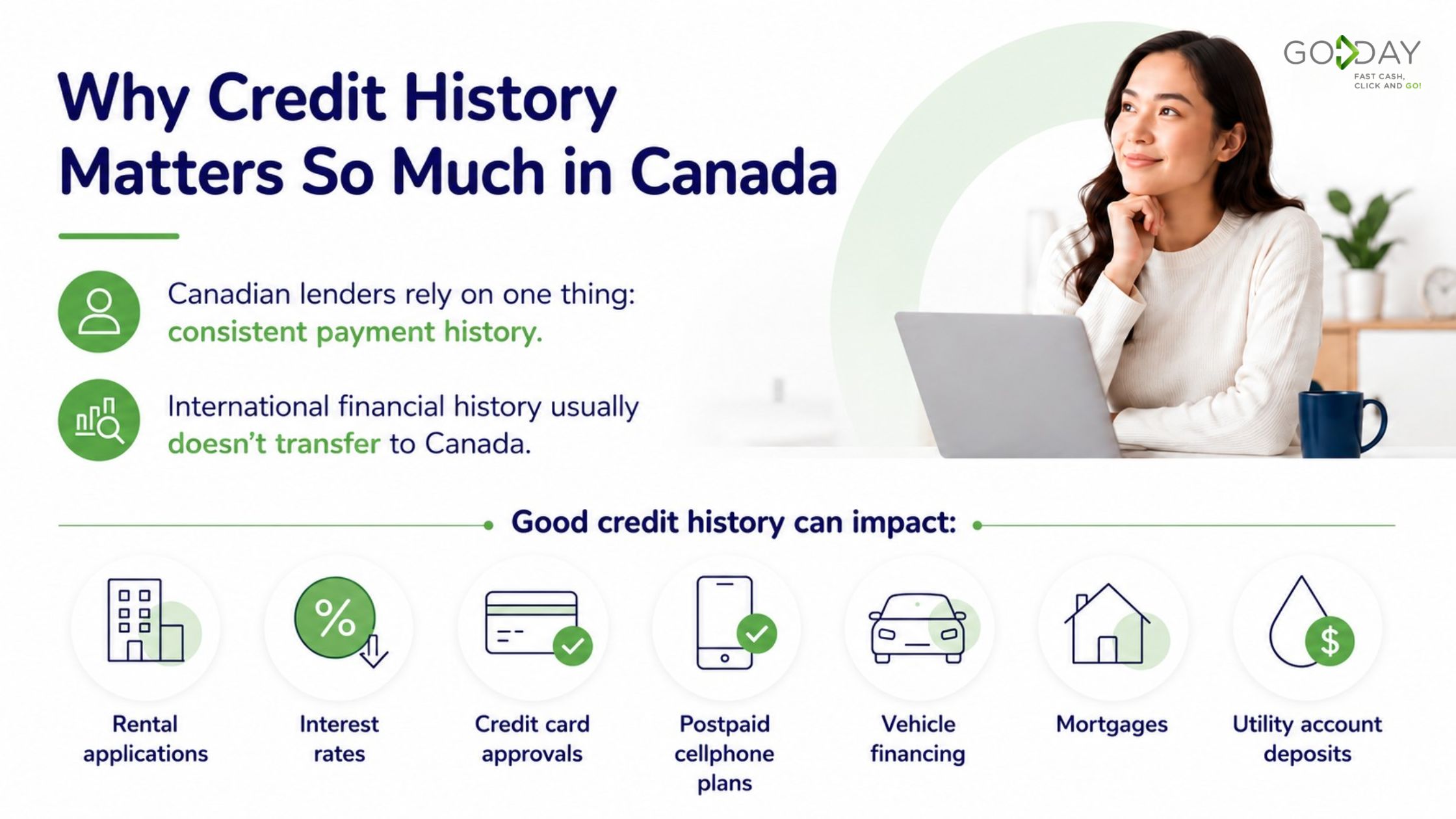
Canadian credit systems are heavily tied to predictability. Lenders want evidence that payments are made consistently over time. Unfortunately, international financial history usually does not transfer into the Canadian system or Canadian credit bureaus like Equifax and TransUnion.
That means even highly successful professionals may arrive with no measurable credit profile, credit score, or Canadian credit report at all.
This affects far more than loan approvals.
Credit history can influence:
- Rental applications
- Interest rates
- Credit card approvals
- Postpaid cellphone plans
- Vehicle financing
- Mortgages
- Utility account deposits
The absence of credit history does not mean someone is financially irresponsible. It simply means the Canadian system has not collected enough payment history yet.
Understanding this distinction matters because many newcomers internalize rejection personally. In reality, they are navigating a system designed around local financial data and creditworthiness.
Small Emergencies Often Become Big Financial Problems
One of the biggest misconceptions about financial emergencies is that they always involve dramatic situations.
In reality, some of the most stressful expenses are relatively ordinary. A broken furnace during winter. Emergency dental treatment. Veterinary bills. School related costs for children. Replacing essential electronics needed for work. Time off due to illness.
These situations create pressure because they demand immediate action. For newcomers still building savings, even a few hundred unexpected dollars can completely disrupt monthly budgeting plans.
That is why budgeting for unexpected expenses matters just as much as managing regular monthly bills.
Emergency planning is not about expecting disaster. It is about recognizing that everyday life is unpredictable, especially during periods of transition and adjustment.
When temporary financial gaps appear unexpectedly, some consumers may decide to apply for an online loan after carefully reviewing their budget, repayment plan, and immediate financial needs.
The Importance of Emergency Funds When Starting Fresh
Building an emergency fund can feel almost impossible during the first stages of settlement.
Rent is high. Basic household costs add up quickly. Employment transitions may still be happening. Income may fluctuate.
Still, even modest emergency savings can reduce financial stress significantly.
The importance of emergency funds is not necessarily about covering every possible crisis immediately. It is about creating breathing room during smaller disruptions so temporary setbacks do not spiral into larger financial problems.
For many people, the goal starts small.
Saving enough to cover:
- A grocery emergency
- Minor car repairs
- Unexpected medication costs
- Temporary childcare expenses
- Utility bill increases
Consistency matters more than perfection. Even setting aside small amounts regularly can gradually create financial stability over time.
And when savings are not immediately available, understanding what to do if bank says no can help newcomers explore responsible alternatives instead of turning toward risky or predatory borrowing situations.
Building Credit Without Burning Out
Building credit often sounds more complicated than it actually is. In most cases, strong credit develops through repeated small actions rather than dramatic financial moves.
Some of the most effective habits include:
- Paying bills and recurring payments on time consistently
- Keeping credit card balances low compared to credit limits
- Avoiding missed payments and unnecessary hard checks
- Using different types of credit responsibly over time
- Monitoring credit reports from Equifax and TransUnion regularly
- Maintaining a healthy credit utilization ratio
- Setting up pre-authorized debits for important accounts
Many newcomers begin with a chequing account and one credit product before gradually diversifying their credit portfolio through options like a credit card, personal loan, line of credit, or installment loan.
According to the Financial Consumer Agency of Canada, habits like making payments on time, keeping balances lower than credit limits, and avoiding excessive borrowing can all help strengthen a credit profile over time.
Many newcomers also begin learning smart ways to build credit without a credit card if they are hesitant about traditional credit products during their first years in Canada.
The key is patience. Credit history grows gradually. Trying to rush the process often creates more financial pressure instead of stability.
Additional Ways to Save Money While Building Stability
Saving money during the settlement process often requires flexibility rather than extreme sacrifice.
Some practical ways newcomers reduce financial strain include:
- Buying secondhand furniture initially
- Sharing transportation costs
- Using community newcomer programs
- Meal planning more intentionally
- Comparing insurance providers regularly
- Avoiding subscription overload
- Tracking hidden monthly spending habits
Small adjustments can create meaningful breathing room over time. Financial stability is rarely built through one perfect decision. More often, it develops through dozens of practical choices repeated consistently.
Tips for Using and Managing Emergency Funds Responsibly
Emergency savings work best when they are treated as protection, not extra spending money.
Some helpful habits include:
- Separating emergency savings from daily spending accounts
- Rebuilding savings after using them
- Avoiding withdrawals for nonessential purchases
- Setting realistic monthly savings goals
- Using savings strategically before taking on unnecessary debt

Financial Confidence Takes Time
Many newcomers quietly compare themselves to people who have spent decades building financial stability in Canada.
That comparison can become discouraging very quickly. What often goes unseen is how long financial systems actually take to build. Strong credit histories are usually the result of years of consistency, not instant success.
Progress may feel slow at first, but every on time payment, savings contribution, and responsible financial decision gradually strengthens long term stability.
Educational resources from Equifax Canada can also help newcomers better understand how credit scores change over time and which financial habits have the biggest long term impact.
The goal is not instant perfection. It is to create a financial foundation that becomes stronger year after year.
Key Takeaways
- New Canadians often face financial challenges because Canadian credit history does not transfer internationally
- Small unexpected expenses can quickly create major budget pressure during the settlement process
- Emergency funds help reduce stress and improve financial flexibility over time
- Building credit usually happens through small, consistent financial habits and positive payment events
- Monitoring credit reports and maintaining low credit utilization can improve long term financial stability
- Responsible borrowing can sometimes help bridge temporary financial gaps
- Financial confidence in Canada develops gradually, not overnight
Frequently Asked Questions
How long does it take to build credit in Canada?
Building strong credit usually takes time and consistency. Many newcomers begin seeing early credit score progress within several months, but developing a stronger credit rating often takes a few years of regular payments, responsible borrowing habits, and consistent account management.
What is the difference between a credit score and a credit report?
A credit score is a numerical summary of your financial reliability, while a credit report contains detailed information about payment history, credit accounts, borrowing activity, and financial behavior collected by credit bureaus like Equifax and TransUnion.
Can having different types of credit improve credit history?
Diversifying a credit portfolio over time through products like credit cards, installment loans, personal loans, or lines of credit can help demonstrate responsible borrowing behavior. However, new accounts should only be opened when they realistically fit within someone’s financial situation.
Why should newcomers monitor their credit reports regularly?
Monitoring credit reports helps consumers track progress, identify fraud, catch reporting errors, and better understand how financial habits affect creditworthiness. Regular monitoring can also help newcomers notice issues early before they affect future borrowing opportunities.
What are some common unexpected expenses newcomers face in Canada?
Unexpected costs often include car repairs, prescription medications, utility bill increases, childcare changes, dental emergencies, pet care, and urgent travel expenses. These smaller financial disruptions can quickly affect monthly budgets, especially during the early settlement period.
Why do banks sometimes reject newcomers for credit products?
Many traditional lenders rely heavily on Canadian credit history, credit reports, and payment history when evaluating applications. Even financially responsible newcomers may have difficulty qualifying initially because their international financial history often does not transfer into Canadian credit score calculations.
What should someone do during a short term financial emergency?
The first step is reviewing available savings, reducing nonessential spending, and exploring responsible borrowing options carefully. Consumers who need additional guidance can also contact GoDay to better understand available borrowing solutions and repayment expectations.
Building Financial Stability Starts With Understanding the System
Feeling financially invisible can be discouraging, especially when you are working hard to build a new life in Canada.
But credit history is not a reflection of your worth, intelligence, or long term financial potential. It is simply a system that takes time to recognize consistency.
Building financial stability often starts with smaller steps than people expect. Learning how credit works. Preparing for unexpected costs. Creating realistic savings goals. Making informed borrowing decisions when temporary support is needed.
At GoDay, we believe financial support should feel transparent, respectful, and practical for Canadians navigating real life financial situations, especially for those who may need to contact GoDay customer support for additional guidance while exploring their options.
For Canadians navigating unexpected costs while still building financial stability, access to flexible online borrowing solutions for Canadians may help provide temporary breathing room during difficult moments.
If unexpected costs appear before your financial foundation feels fully established, you can always apply for an online loan responsibly after reviewing your budget, repayment plan, and short term financial needs.